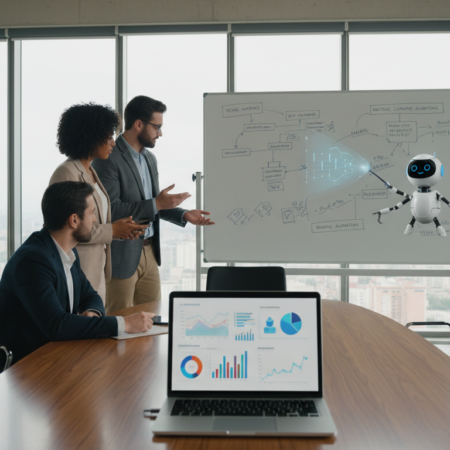







The cybersecurity landscape is rapidly evolving, with sophisticated threats requiring advanced detection and response capabilities beyond traditional security measures. As organizations face growing volumes, velocities, and complexities of cyber threats targeting their networks and systems, they are increasingly adopting AI-powered security solutions.
Today, 95% of users agree that AI-powered cybersecurity solutions improve the speed and efficiency of prevention, detection, response, and recovery. By analyzing vast amounts of data at machine speed, AI applications in cybersecurity identify patterns and anomalies that human analysts might miss, enabling organizations to move from reactive to proactive security postures.
Key Takeaways
- Cybersecurity threats are becoming increasingly sophisticated, requiring advanced detection and response capabilities.
- AI-powered security solutions improve the speed and efficiency of prevention, detection, response, and recovery.
- Organizations are adopting AI applications in cybersecurity to address growing cyber threats.
- AI analyzes vast amounts of data to identify patterns and anomalies that human analysts might miss.
- AI enables organizations to move from reactive to proactive security postures.
Understanding AI in Cybersecurity
The integration of Artificial Intelligence (AI) into cybersecurity marks a significant shift in how organizations approach security threats. AI introduces a predictive layer to traditional security tools, enhancing their ability to identify and mitigate threats.
Definition and Core Technologies
AI in cybersecurity refers to the use of machine learning algorithms and other AI technologies to detect, analyze, and respond to cyber threats. Core AI technologies include machine learning, deep learning, and natural language processing, which enable systems to learn from data, identify patterns, and make decisions without human intervention. For instance, AI-powered systems can detect odd file behaviors and monitor unusual communication between devices, even without prior examples of such threats.
The Evolution of AI in Security Systems
The evolution of AI in security systems has transformed the cybersecurity landscape. Initially, security tools relied on signature-based detection, which was inadequate against evolving threats and zero-day attacks. Modern AI-powered security systems, however, can detect anomalies and potential threats without prior knowledge of specific attack signatures. This represents a fundamental shift in approach, from reactive to proactive defense mechanisms.
Key developments in the evolution of AI in security include:
- The progression from simple rule-based detection to sophisticated behavioral analysis and predictive capabilities.
- The incorporation of machine learning to identify subtle indicators of compromise as attackers developed evasion techniques.
- The deployment of AI security systems that continuously learn and adapt to new threats, improving detection capabilities over time.
As a result, organizations can now predict and prevent attacks before they fully materialize, significantly enhancing their cybersecurity posture.
| Evolution Stage | Characteristics | Impact on Cybersecurity |
|---|---|---|
| Signature-based Detection | Relying on known threat signatures | Limited against zero-day attacks |
| AI-powered Detection | Using machine learning for anomaly detection | Effective against unknown threats |
The Growing Need for AI Applications in Cybersecurity
The increasing complexity of cyber threats has made AI a necessary component in modern security systems. As the digital landscape expands, organizations face an unprecedented number of cyber attacks, making it challenging for traditional security measures to keep pace.
Modern Cybersecurity Challenges
Cybersecurity challenges are becoming more daunting as attackers develop new techniques to bypass traditional defenses. The sheer volume of data and transactions being processed online has created an environment where threats can easily go unnoticed. Modern cybersecurity challenges include the need for real-time detection and response to emerging threats.
Limitations of Traditional Security Approaches
Traditional security tools and approaches have several limitations. They rely heavily on signature-based detection, which can only identify known threats with established patterns. This reactive approach means that organizations are constantly playing catch-up, implementing defenses only after attackers have already developed new techniques. Moreover, traditional security systems often generate excessive false positives, leading to alert fatigue and increasing the risk that genuine threats will be overlooked.
At the same time, manual threat investigation and response processes are too slow to keep pace with the speed of modern attacks, allowing threats to persist in networks for extended periods before detection. The lack of integration among legacy security tools also hinders the ability to correlate events across different security domains, making it difficult to identify sophisticated multi-vector attacks.
Core AI Applications in Cybersecurity
AI applications in cybersecurity are transforming the landscape by enhancing threat detection, incident response, and security analytics. This transformation is crucial as cyber threats become more sophisticated and pervasive.
Threat Detection and Intelligence
AI-driven threat detection systems can identify and analyze threats in real-time, providing organizations with timely insights to mitigate potential attacks. These systems can monitor network traffic to detect anomalies that may indicate malicious activity.
- AI-enhanced network security monitors traffic patterns to detect anomalies.
- Advanced threat detection systems use AI to analyze process behavior and identify malicious activities.
Behavioral Analytics and Anomaly Detection
Behavioral analytics powered by AI helps in identifying unusual patterns of behavior that may signify a security breach. By analyzing user and entity behavior, AI systems can detect detection anomalies that traditional security measures might miss.
- AI-driven behavioral analytics can identify insider threats by monitoring user behavior.
- Anomaly detection systems can alert security teams to potential threats in real-time.
Network and Endpoint Security
AI plays a critical role in securing both endpoints and the network. By analyzing network traffic and endpoint behavior, AI can identify and mitigate threats before they cause significant damage.
- AI-powered network traffic analysis can identify encrypted malicious communications.
- Intelligent endpoint security solutions can automatically isolate compromised devices.
In conclusion, AI is revolutionizing cybersecurity by enhancing threat detection, improving incident response, and securing network and endpoints. As cyber threats continue to evolve, the role of AI in cybersecurity will become increasingly important.
AI-Powered Phishing and Social Engineering Prevention
Phishing and social engineering attacks are becoming increasingly complex, but AI-powered tools are providing a robust defense mechanism. These sophisticated cyber threats pose a significant risk to organizational security, making it essential to leverage advanced technologies for threat detection and prevention.
How AI Identifies Sophisticated Phishing Attempts
AI tools, such as CAPTCHA, facial recognition, and fingerprint scanners, enable organizations to automatically detect whether an attempt to log in to a service is genuine. AI-driven security solutions provide real-time protection against social engineering by analyzing user interactions with potentially malicious content as they occur.

Real-Time Protection Against Social Engineering
AI-powered security awareness training can adapt to individual user behavior, providing personalized guidance based on their specific vulnerability to different social engineering tactics. The following table illustrates the capabilities of AI-driven security solutions in preventing social engineering attacks:
| AI-Driven Capability | Description | Benefit |
|---|---|---|
| Real-Time Analysis | Analyzing user interactions with potentially malicious content | Immediate detection and response to threats |
| Predictive Analytics | Analyzing historical social engineering patterns | Prevention of future attacks before they reach potential victims |
| Advanced Threat Detection | Detecting voice deepfakes and manipulated media | Enhanced security for high-value users |
By leveraging these AI-driven capabilities, organizations can significantly enhance their protection against sophisticated phishing attempts and social engineering attacks, ultimately safeguarding their users and maintaining the integrity of their security posture.
Identity and Access Management Enhanced by AI
Identity and access management are being transformed by AI-driven solutions. These advanced technologies are significantly enhancing security measures, making it more difficult for unauthorized users to gain access to sensitive information.
Behavioral Authentication Systems
AI-powered behavioral authentication systems analyze user behavior patterns to verify identities. These systems monitor various factors, including login attempts, transaction history, and device information, to detect anomalies that may indicate a threat or attack. By continuously learning and adapting to new patterns, AI models can more effectively identify and prevent fraudulent activities.
Preventing Credential Theft and Account Takeover
AI helps prevent credential theft and account takeover by constantly monitoring login attempts, transactions, and user behavior for unusual activity. Unlike static rules that attackers can quickly bypass, AI models adapt to changing patterns and flag high-risk behavior in real-time. Organizations are increasingly relying on AI-based identity verification to lower fraud rates and protect customer accounts. For instance, solutions like SentinelOne’s identity security detect credential misuse and abnormal access attempts at machine speed, resulting in stronger protection against credential abuse and fewer successful account takeovers.
Some key benefits of AI-enhanced identity and access management include:
- Detection of credential stuffing attacks through patterns of failed login attempts across multiple accounts.
- Analysis of login contexts, including device information and location data, to identify suspicious access attempts.
- Monitoring for unusual access patterns following successful authentication to detect compromised accounts used for data exfiltration or privilege escalation.
By leveraging AI for identity and access management, organizations can significantly enhance the security of their systems and protect users’ sensitive data.
AI for Vulnerability Management and Patch Prioritization
AI-powered systems are transforming the way organizations approach vulnerability management, making it more proactive and risk-based. By analyzing vast amounts of data, AI can identify potential vulnerabilities and predict the likelihood of exploitation, enabling organizations to prioritize their remediation efforts more effectively.
Risk-Based Vulnerability Assessment
AI-powered vulnerability management systems analyze thousands of security vulnerabilities to prioritize them based on exploitability, threat intelligence, and organizational context. This risk-based approach ensures that the most critical vulnerabilities are addressed first, reducing the overall security risk to the organization.
By leveraging AI, organizations can also clean up outdated or overly broad permissions, reducing the risk of stolen credentials and accidental exposure. This proactive approach to vulnerability management helps organizations stay ahead of potential threats.
Automated Patch Management
Automated patch management systems use AI to schedule and deploy security updates based on vulnerability severity, system criticality, and operational impact. These platforms can automatically test patches in isolated environments before deployment, reducing the risk of compatibility issues or system disruptions.
- AI-driven patch management reduces the time between vulnerability disclosure and remediation, closing security gaps before attackers can exploit them.
- Machine learning algorithms optimize patch deployment schedules based on system usage patterns, minimizing disruption to business operations.
- Automated patch management significantly reduces the manual effort required for security maintenance, allowing organizations to allocate resources to more strategic security initiatives.
By streamlining the patch management process, AI helps organizations reduce their exposure to known vulnerabilities, improving their overall security posture.
Top AI-Powered Cybersecurity Tools
As cybersecurity threats evolve, organizations are turning to AI-powered tools to bolster their defenses. The landscape of cybersecurity is rapidly changing, with AI-driven solutions playing a crucial role in detecting and mitigating threats.
AI-Powered Endpoint Security Solutions
AI-powered endpoint security solutions enhance threat detection and response at the endpoint level. These solutions use machine learning to analyze endpoint data, identify potential threats, and automate response actions.

Security Information and Event Management (SIEM) with AI
AI-enhanced SIEM platforms analyze security event data to identify potential threats and anomalies. By integrating AI, these platforms can process vast amounts of data more efficiently, improving incident detection and response.

AI-Driven Network Detection and Response (NDR)
AI-driven NDR solutions monitor network traffic to detect sophisticated threats that may bypass traditional security measures. By analyzing network traffic patterns and communication flows, AI-enhanced network security can identify anomalies indicating attack or data exfiltration.
- Analyze network traffic to detect threats that have bypassed perimeter defenses.
- Use machine learning to establish baselines of normal network behavior.
- Detect threats in encrypted traffic by analyzing metadata.

Generative AI in Cybersecurity: Opportunities and Risks
The emergence of generative AI in cybersecurity has brought about a paradigm shift, presenting both opportunities for enhanced security and risks of sophisticated attacks. As organizations continue to adopt AI-driven solutions, understanding the dual nature of generative AI is crucial.
Defensive Applications
Generative AI can significantly enhance cybersecurity defenses by generating realistic test data for training security models, improving incident response through simulated attack scenarios, and creating more effective phishing detection systems. Organizations can leverage these capabilities to strengthen their security posture. For instance, generative AI can help create diverse datasets for training machine learning models, improving their ability to detect novel attacks.
| Defensive Application | Description | Benefit |
|---|---|---|
| Realistic Test Data Generation | Generative AI creates realistic data for training security models. | Improved detection of novel attacks. |
| Simulated Attack Scenarios | AI simulates various attack scenarios for incident response training. | Enhanced preparedness for real attacks. |
How Attackers Leverage Generative AI
On the offensive side, attackers are using generative AI to craft more convincing phishing emails, generate polymorphic malware that evades detection, and create deepfakes for sophisticated social engineering attacks. These malicious activities pose significant challenges for security systems, as they can mimic legitimate behaviors and evade traditional detection methods.
- Creating highly convincing phishing emails that bypass common red flags.
- Generating polymorphic malware that constantly changes its code.
- Crafting deepfake audio and video for social engineering attacks.
As cyber threats evolve, it’s essential for organizations to stay ahead by adopting advanced security measures and leveraging tools that can counter these emerging threats.
Future Trends in AI for Cybersecurity
As cyber threats evolve, AI is poised to play a crucial role in enhancing cybersecurity measures. The future of cybersecurity will be shaped by several key trends that leverage AI’s capabilities to protect against increasingly sophisticated attacks.
Autonomous Response Systems
Autonomous response systems represent a significant advancement in AI-driven cybersecurity. These systems can detect and respond to cyber threats in real-time without human intervention. By leveraging machine learning algorithms and predictive analytics, autonomous systems can identify potential security threats and mitigate them before they cause harm.
Federated Learning for Privacy-Preserving AI
Federated learning is an emerging trend that enables AI models to be trained on decentralized data, preserving privacy while enhancing cybersecurity intelligence. This approach allows organizations to collaborate on AI model training without sharing sensitive information, thereby improving the overall security posture across different environments.
AI’s Role in Quantum-Resistant Cryptography
The advent of quantum computing poses a significant threat to current cryptographic systems, as it has the potential to break many encryption methods currently in use. AI is helping to develop quantum-resistant cryptography by analyzing potential attack vectors and assisting in the design of new, more secure cryptographic protocols. This ensures that cybersecurity solutions remain effective even as computing capabilities evolve.
In conclusion, the future of AI in cybersecurity is promising, with trends like autonomous response systems, federated learning, and quantum-resistant cryptography set to enhance security measures. As cyber threats continue to evolve, these AI-driven solutions will be crucial in protecting organizations and their assets.
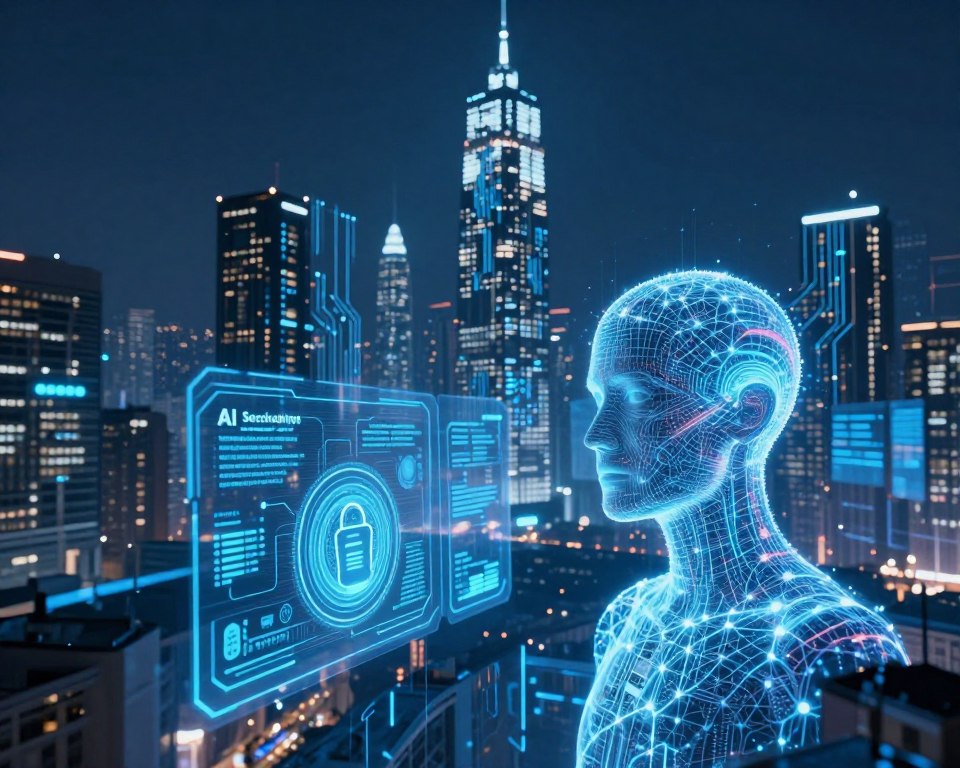
Conclusion: Balancing AI Innovation with Human Expertise
As the role of AI in cybersecurity expands, it’s essential to recognize that the most effective security strategies are those that combine the strengths of AI with the insights of human professionals. AI excels at processing vast amounts of data and automating repetitive tasks, but human security teams bring contextual understanding and creative problem-solving.
Organizations that successfully implement AI in their security operations understand that these systems are meant to augment human capabilities, not replace them. The future of cybersecurity lies in collaborative intelligence, where humans and AI tools work together to create more robust defenses against evolving threats.
To achieve this, organizations must invest in both advanced AI automation and the human expertise needed to guide and interpret the insights these cyber systems provide, ensuring a resilient security posture over time.
FAQ
How does machine learning enhance threat detection in cybersecurity?
What is the role of AI in incident response?
How does AI improve user behavior analysis?
What are the benefits of using AI in vulnerability management?
How does AI enhance security information and event management (SIEM) systems?
What is the role of federated learning in AI-powered cybersecurity?
How does AI improve identity and access management?

Other Articles

AR Online Learning: Unlock the Power of Augmented Reality
AR VR Developers: Unleash the Power of Immersive Tech