







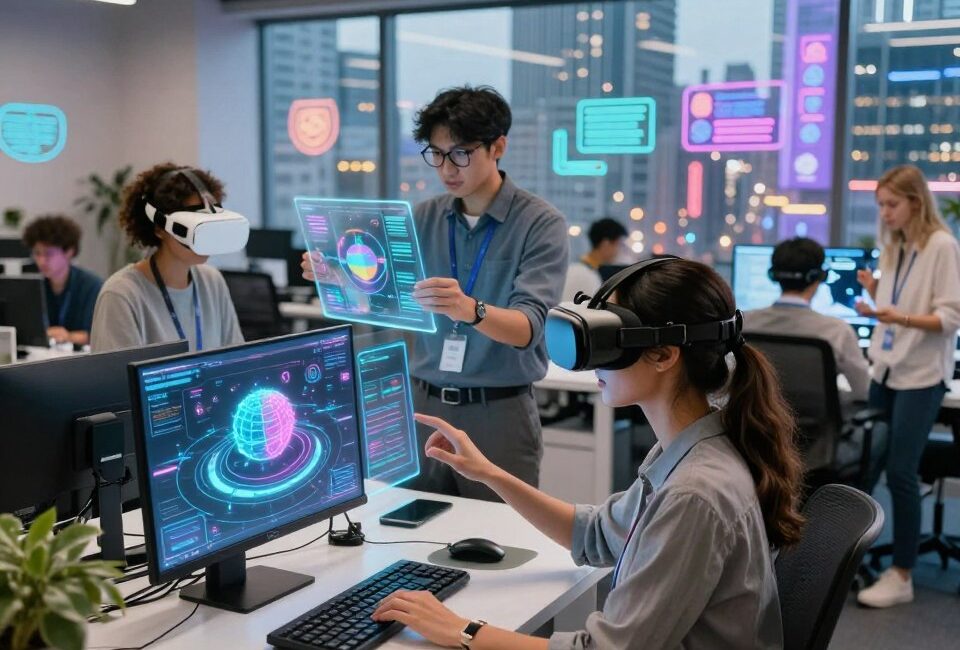
You’re on the cusp of a technological revolution with immersive experiences transforming industries from healthcare to entertainment. Virtual and augmented reality are revolutionizing the way businesses engage with customers, train employees, and visualize complex data.
As virtual reality delivers strong return on investment (ROI) across industries, the demand for expert development partners is skyrocketing. To capitalize on this trend, you need to find the right AR VR developers with proven expertise and execution capabilities.
By leveraging immersive technologies, businesses can create new opportunities for growth and innovation. In this article, we’ll explore the top development companies, industry applications, selection criteria, and cost considerations to help you make informed decisions.
Key Takeaways
- Immersive experiences are revolutionizing industries and transforming the way businesses operate.
- The demand for expert AR VR developers is growing rapidly.
- Virtual reality is delivering strong ROI across industries.
- Immersive technologies are creating new opportunities for businesses to engage with customers and train employees.
- Finding the right development partner is crucial to capitalizing on the trend.
The Rising World of Immersive Technology
The immersive technology landscape is evolving at a breakneck pace, transforming how we interact with digital content. As a result, businesses and consumers are increasingly adopting augmented reality (AR), virtual reality (VR), and mixed reality (MR) technologies to enhance their experiences.
Understanding AR, VR, and Mixed Reality
Immersive technologies are redefining the way we engage with digital information. AR overlays digital content onto the real world, enhancing our surroundings with interactive and informative elements. In contrast, VR creates fully immersive digital environments, transporting users to new worlds and experiences. Meanwhile, MR blends elements of both AR and VR, allowing for seamless interactions between the physical and digital worlds.
Market Growth and Future Projections
The virtual reality market is experiencing rapid growth, with the global VR market size estimated at $12.88 billion in 2025 and projected to reach $41.42 billion by 2030. This expansion is driven by widespread enterprise adoption across training, education, and collaboration, as well as the integration of VR with emerging technologies like AI, business intelligence, and Digital Twins.
| Technology | 2025 Market Size | 2030 Projected Market Size |
|---|---|---|
| Virtual Reality | $12.88 billion | $41.42 billion |
| Augmented Reality | $5.5 billion | $15.3 billion |
| Mixed Reality | $2.1 billion | $8.5 billion |
As major tech companies invest heavily in immersive technology infrastructure and platforms, the future of AR, VR, and MR looks promising. The convergence of these technologies is creating new possibilities for businesses and consumers, driving innovation and growth in the industry.
What AR VR Developers Do
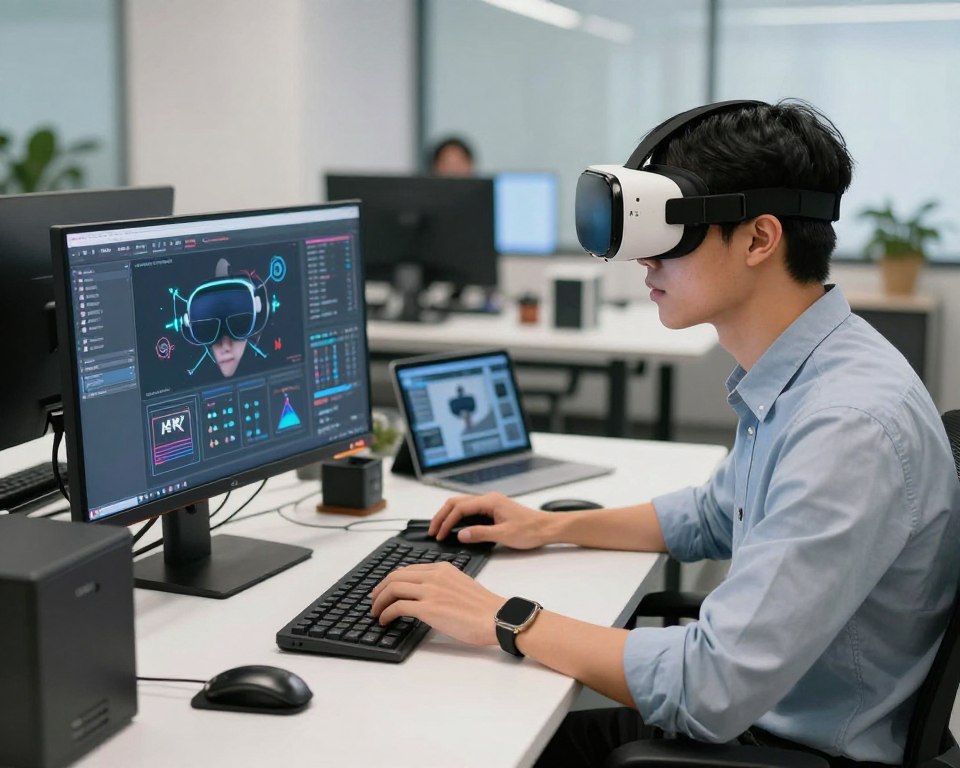
AR VR developers play a vital role in shaping the future of interactive experiences. They specialize in creating immersive experiences that blend the digital and physical worlds, using reality technology to innovate and transform industries.
Core Responsibilities and Daily Activities
AR VR developers are responsible for designing and implementing immersive experiences across various platforms and devices. Their daily activities include collaborating with cross-functional teams, such as designers and project managers, to bring AR VR applications to life.
They spend their days coding, debugging, and testing AR VR software to ensure seamless user interaction. By leveraging tools like Unity and Unreal Engine, developers create engaging and interactive environments that push the boundaries of technology.
Technical Skills and Expertise Required
To succeed, AR VR developers must possess a strong foundation in programming languages like C# and C++. They should also be proficient in 3D modeling, spatial design, and user interface skills to create intuitive and engaging experiences.
Additionally, AR VR developers need to understand both technical limitations and human perception to create effective immersive environments. Familiarity with specialized tools and SDKs, such as ARKit and ARCore, is also essential for their work.
Top AR VR Developers in 2025
In 2025, the most innovative AR VR development companies are pushing the boundaries of what’s possible in immersive technology. As the demand for augmented reality and virtual reality solutions continues to grow, these companies are at the forefront of creating immersive experiences for various industries.
Treeview – New York City
Treeview stands out as a premier VR development studio, specializing in high-quality virtual reality and augmented reality solutions for enterprise clients. Since 2016, they have built an impressive portfolio working with over 40 clients, including major organizations like Meta, Microsoft, and ULTA Beauty.
YORD – Czech Republic
YORD is an AR & VR studio that provides Virtual and Augmented Reality solutions to enterprise and government clients. They are an XR studio that offers VR, AR, and AI solutions to enterprises, making them a versatile player in the industry.

Takeaway Reality – London
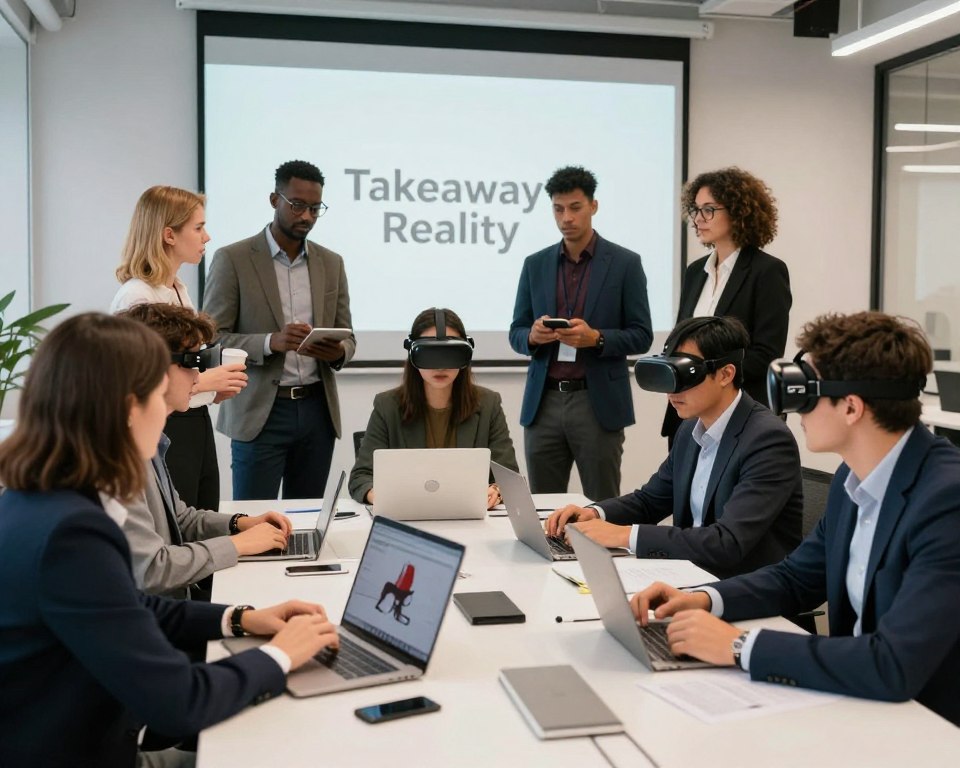
Takeaway Reality combines consulting and development in the AR/VR space to deliver a white-glove experience to clients. They have created bespoke Augmented Reality and Virtual Reality experiences for well-known brands like Microsoft and Ford.
Next/Now – Chicago
Next/Now is an innovation agency specializing in experience design for visionary leaders. They work with brands like Cubs, United Airlines, Intel, and Whirlpool across VR, AR, projection mapping, and other emerging technologies.

MPMTeam – San Francisco
MPMTeam specializes in Creative Marketing, bringing innovative ideas to life through visually stunning and impactful campaigns. They focus on immersive experiences, 3D animations, metaverse activations, and out-of-home marketing.

Other Notable AR VR Development Companies
Other notable companies in the AR VR development space include Niantic, Unity, The Void, and Groove Jones. Each of these companies brings unique specializations and has worked on notable projects that have pushed the boundaries of reality solutions.
Niantic is known for its location-based AR experiences, while Unity is a leading game engine provider that also offers AR VR development tools. The Void has created immersive VR experiences, and Groove Jones is known for its AR and VR marketing solutions.
These top AR VR development companies differentiate themselves through their technical expertise, industry specialization, and innovative approaches to creating immersive experiences. As the demand for AR VR technology continues to grow, these companies are poised to lead the way in shaping the future of immersive technology.
Industry Applications of AR VR Technology
The versatility of AR VR technology is evident in its wide-ranging industry applications. As immersive technologies continue to evolve, they’re being adopted across various sectors to enhance efficiency, engagement, and innovation.
Healthcare and Medical Training
AR VR is revolutionizing healthcare through surgical training simulations, patient education, and therapeutic applications. Notably, VR training has led to a 40% reduction in surgical mistakes. Medical professionals are using immersive technologies for anatomical visualization, phobia treatment, and rehabilitation programs. The healthcare sector is projected to experience 30.3% market growth through 2030, driven by the increasing adoption of AR VR solutions.
Education and Skill Development
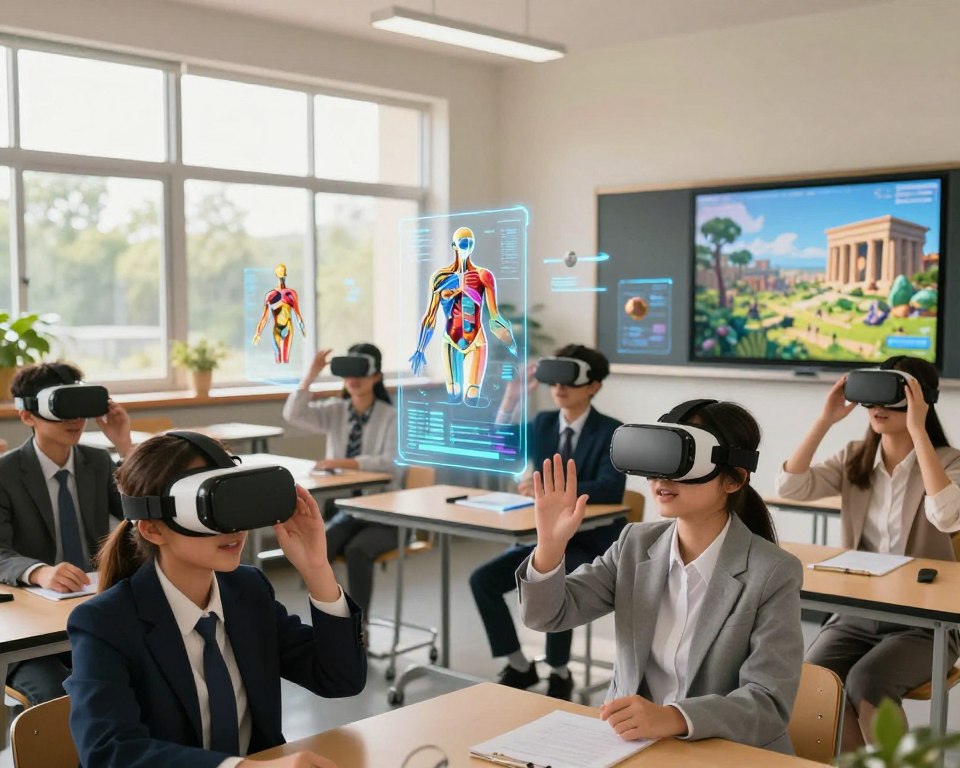
Educational institutions are leveraging AR VR to create interactive learning environments, facilitate hands-on skill development, and organize virtual field trips. This approach has shown to enhance student engagement and knowledge retention. The education sector is expected to witness sixfold market growth with a 30.7% CAGR as institutions continue to embrace immersive learning technologies.
Manufacturing and Industrial Design
In manufacturing and industrial settings, AR VR is being utilized for design visualization, assembly training, and maintenance procedures. This has resulted in a 43% reduction in workplace injuries through VR safety training programs. AR VR is also transforming product development cycles and quality control processes across industrial applications.
Entertainment and Gaming
The entertainment and gaming industries are at the forefront of AR VR adoption, offering immersive gaming experiences, virtual concerts, and interactive storytelling. These applications are pushing the boundaries of user engagement and entertainment, further driving the growth of AR VR technologies.
In conclusion, the diverse industry applications of AR VR technology demonstrate its versatility and growing importance across different sectors. As these technologies continue to advance, we can expect to see even more innovative applications emerge, transforming industries and revolutionizing the way we work, learn, and play.
How to Choose the Right AR VR Developers
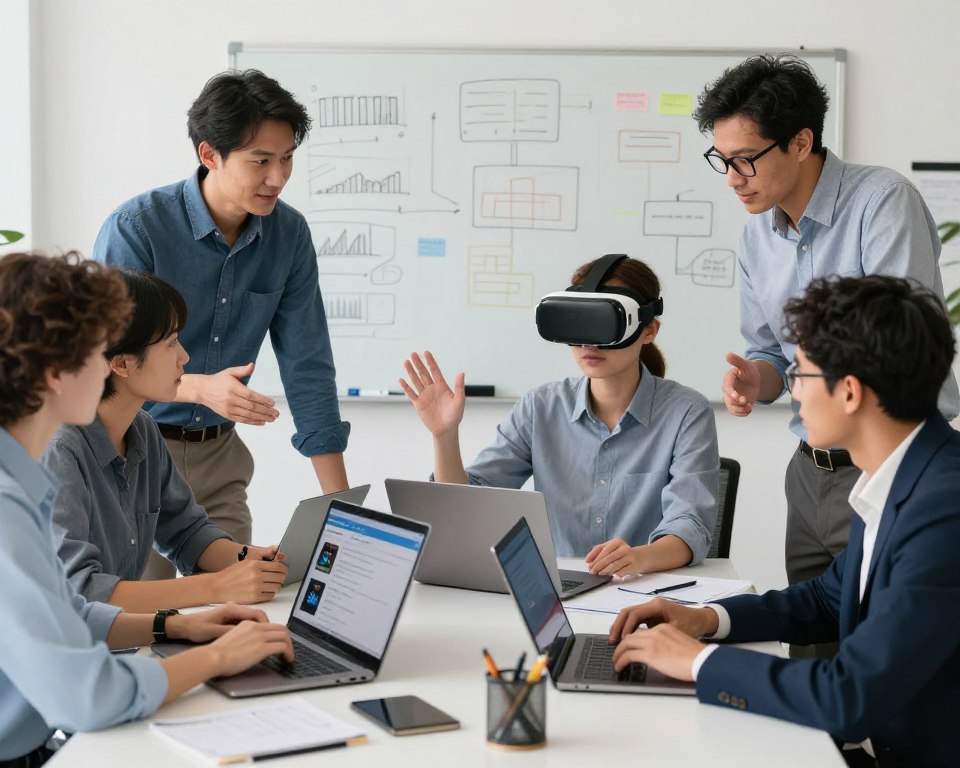
To find the best AR VR development company, you must assess their technical expertise, portfolio, and cultural fit. Selecting the right AR VR developer is a critical decision that can significantly impact the success of your immersive technology project.
Technical Expertise and Portfolio Assessment
When evaluating AR VR development companies, it’s essential to assess their technical capabilities across various platforms such as Apple Vision Pro, Meta Quest, and Magic Leap. Reviewing their portfolio for quality, relevance, and technical sophistication can provide insights into their creating immersive experiences. Look for companies with a proven track record in developing complex AR VR applications.
Industry Experience and Cultural Fit
Industry-specific experience is crucial when choosing an AR VR development partner. Developers with knowledge of your sector can deliver more effective immersive solutions. Additionally, cultural fit and communication styles play a significant role in long-term collaboration. Ensure that the company you choose aligns with your business values and has a flexible approach to handle ever-changing requirements.
Post-Launch Support and Long-Term Partnership
Post-launch support, maintenance capabilities, and ongoing optimization services are vital factors in your decision-making process. A reliable AR VR development company should offer comprehensive support to ensure the long-term success of your project. Evaluate their commitment to technology and innovation to ensure they can meet your future needs.
Understanding AR VR Development Costs
Investing in AR VR technology requires a thorough understanding of the associated development costs to ensure a successful project. The cost of developing AR VR applications can vary significantly based on several factors, including project scope and technical requirements.
Common Pricing Models
AR VR development companies typically use various pricing models, including hourly rates ($50-$200 per hour), fixed project fees ($50,000 to $200,000+), and retainer models for ongoing support and maintenance. Understanding these models is crucial for businesses to budget effectively.
Key Cost Drivers in AR VR Projects
The key factors that influence AR VR development costs include project complexity, content quality, platform support, and team expertise. For instance, the scope of 3D content creation, including environments, characters, and interactive elements, significantly impacts overall project budgets.
Budgeting for Maximum ROI
To maximize return on investment in AR VR projects, businesses should consider phased development approaches and prioritize features based on business impact. It’s also essential to account for post-launch support, updates, and content refreshes when budgeting for AR VR initiatives.
By understanding the cost structures and key cost drivers, you can make informed decisions when selecting an AR VR development company and ensure that your project meets your business objectives.
Becoming an AR VR Developer
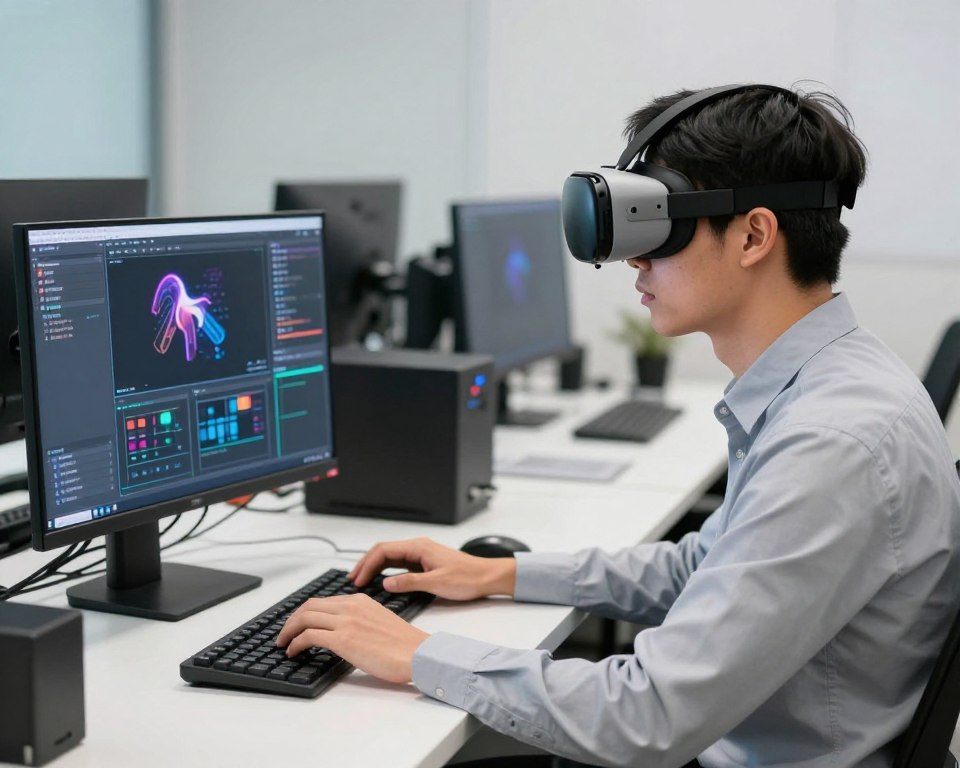
Becoming an AR VR developer involves acquiring specific technical skills and knowledge. To succeed in this field, you’ll need to understand the fundamentals of both augmented reality (AR) and virtual reality (VR) technologies.
Required Skills and Education Path
To become a successful AR VR developer, you’ll need skills in 3D programming, game engines like Unity or Unreal Engine, and programming languages such as C# or C++. Formal education in computer science or related fields can provide a solid foundation. Alternatively, online courses and bootcamps can help you acquire the necessary skills.
Salary Expectations and Job Outlook
The average salary for an AR VR Developer in the US is $121,155, according to Salary.com. The job market is expected to grow by 47% through 2030, with approximately 64,957 job openings. Factors influencing compensation include location, experience, and specific industry.
Building a Professional Portfolio
Creating a strong portfolio is crucial for showcasing your technical skills and creativity to potential employers. Participate in hackathons, contribute to open-source projects, and network within the AR VR community to build your professional connections and demonstrate your capabilities.
Conclusion: The Future of Immersive Technology
As AR VR technology continues to advance, developers are pushing the boundaries of what’s possible in virtual and augmented reality. The transformative impact of AR VR developers is being felt across industries, from healthcare and education to manufacturing and entertainment.
Enterprise adoption is projected to drive 60% of total VR revenue by 2030, creating an estimated 2.32 million AR/VR jobs across the United States. By leveraging cutting-edge technology, companies are improving learning outcomes, reducing costs, and boosting sales. As immersive technologies become more central to business strategy, selecting the right development partners will be crucial.
The future of immersive technology holds much promise, with emerging trends like the integration of artificial intelligence and IoT set to further enhance AR VR applications. As we move forward, it’s essential for businesses to explore how AR VR developers can help them achieve their objectives through custom immersive solutions.
FAQ
What is the difference between Augmented Reality and Virtual Reality?
How is Mixed Reality related to AR and VR?
What industries benefit the most from AR VR technology?
What skills are required to become an AR VR Developer?
How do I choose the right AR VR Development Company for my project?
What are the common pricing models for AR VR development projects?
How can I measure the ROI of my AR VR project?

Other Articles

AI Applications for Enhanced Cybersecurity
Technology Business Insurance: Safeguard Your Startup