







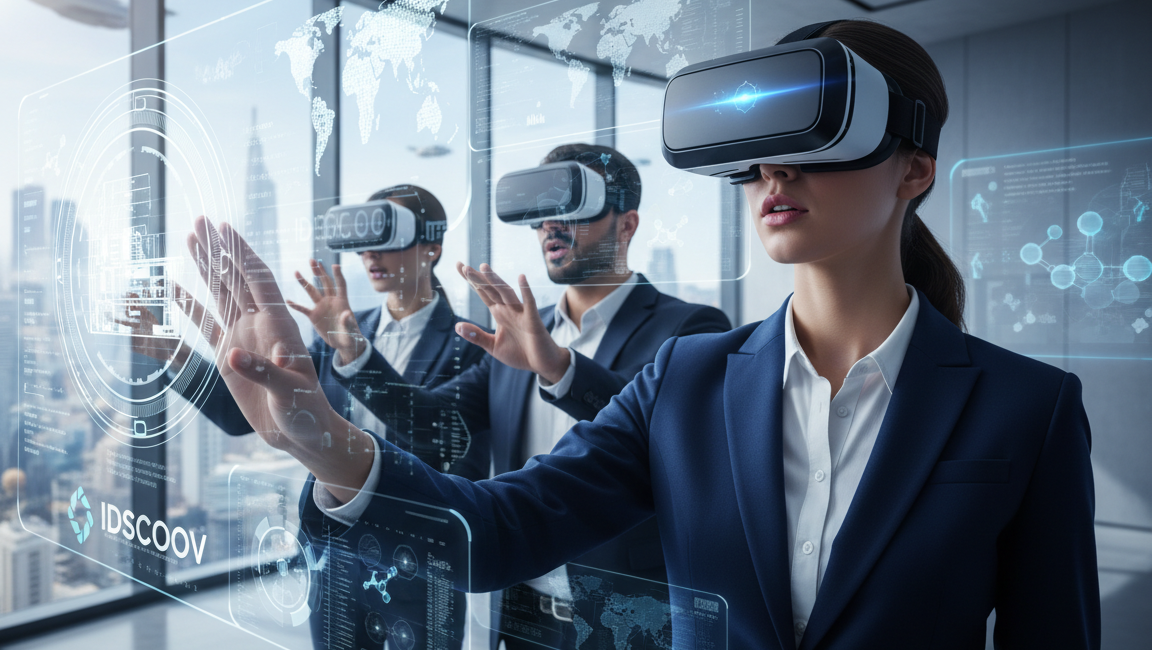
Are you ready to immerse yourself in the rapidly evolving world of virtual reality? As we step into the latest developments, you’ll discover how VR technology is transforming industries beyond gaming.

The VR landscape has undergone significant transformation in 2025, with major players like Meta, Apple, Google, and Sony making strategic moves. You’re likely to be intrigued by the innovations in hardware and software that are making VR more accessible than ever before.
Key Takeaways
- Major tech companies are reshaping the VR competitive landscape.
- VR is expanding into healthcare, entertainment, and corporate applications.
- Significant price drops are making VR more accessible.
- Technological advancements are driving VR innovation.
- Industry talent wars are creating new dynamics in VR product development.
The Current State of Virtual Reality in 2025
The critics who once proclaimed VR’s demise are being proven wrong as 2025 unfolds with remarkable VR developments. This year has witnessed an unprecedented surge in VR innovation and market growth, according to Android Central, while smart glasses have simultaneously evolved from experimental gadgets into legitimate consumer products.
Record Growth and Market Expansion
The virtual reality market has experienced significant expansion, driven by major technology companies investing heavily in VR technology. The convergence of these technologies represents a pivotal moment for extended reality, with new applications emerging across industries.
- Virtual reality has completed its transformation from niche technology to mainstream computing platform in 2025.
- The technology has reached a critical inflection point where ease of use, content availability, and price have aligned to drive mainstream consumer acceptance.
- Major technology companies have repositioned VR headsets as essential computing devices.
From Niche Technology to Mainstream Computing Platform
As VR continues to mature, you’re seeing increasing integration of virtual reality into everyday workflows, education systems, and entertainment platforms. The market expansion has been supported by significant improvements in user experience, with more intuitive interfaces and reduced technical barriers to entry. Content ecosystems have matured substantially, offering compelling experiences that attract users who previously showed little interest in the technology, particularly with the advancement of VR headsets by various tech company.
Meta’s Strategic Pivot in the VR Space
In a surprising move, Meta has delayed the launch of its highly anticipated Phoenix mixed reality glasses. The company has pushed back the launch timeline from late 2026 to early 2027, marking a significant shift in how Meta approaches hardware development in the post-“move fast and break things” era.
Reality Labs Budget Cuts and Refocusing Efforts
Meta’s Reality Labs division is facing potential budget reductions of up to 30%. This move is part of a broader strategic pivot away from the “move fast and break things” philosophy that characterized earlier development approaches. The budget cuts reflect CEO Mark Zuckerberg’s directive to prioritize product quality and business sustainability over rushing products to market before they’re fully refined.
- The delay in the Phoenix mixed reality glasses launch reflects a more measured approach to product launches and market timing.
- Industry analysts note that this delay may actually strengthen Meta’s position by allowing more time for technological refinement and ecosystem development before the product reaches consumers.
Postponement of Phoenix Mixed Reality Glasses
The postponement of the Phoenix mixed reality glasses indicates Meta’s recognition that mixed reality glasses require exceptional quality and user experience to achieve mainstream adoption. This strategic decision reflects lessons learned from previous VR/AR product launches where rushing to market created adoption challenges that were difficult to overcome post-launch.
You can expect Meta to focus on delivering a high-quality product, even if it means delaying the launch. This approach demonstrates Meta’s commitment to making a meaningful impact in the mixed reality space.
Apple Vision Pro M5: The Premium VR Experience

Apple’s latest innovation in virtual reality, the Vision Pro M5, is redefining the premium VR experience. The device is powered by advanced silicon, representing a significant advancement in spatial computing technology.
Key Upgrades and Improvements
The Apple Vision Pro M5 maintains its position as the premium offering in the VR market. Key upgrades include enhanced silicon performance, improved display quality, and advanced spatial audio capabilities. These improvements have addressed previous limitations, enhancing the overall user experience.
Market Position and Consumer Response
The Vision Pro M5 continues to attract high-end consumers and professionals who value Apple’s ecosystem integration and premium build quality. Despite its $3,499 price point, the device has garnered positive reviews, with critics praising its technical improvements and productivity features. Apple’s focus on spatial computing rather than traditional VR gaming has positioned the Vision Pro M5 as a niche product with significant industry influence.
Meta Quest 3S: Affordable Entry into Premium VR

At $249, the Meta Quest 3S offers an unbeatable entry point into premium VR. This significant price drop isn’t just a holiday discount; it represents a fundamental shift in making high-quality VR technology accessible to everyday consumers.
Historic Low Pricing and Market Strategy
The Meta Quest 3S has reached its historic low price of $249, down from $299. This aggressive pricing strategy puts the Meta Quest 3S in direct competition with traditional gaming consoles, changing how consumers approach holiday entertainment purchases.
Technical Specifications and Gaming Capabilities
The Meta Quest 3S boasts impressive technical specifications, including a Snapdragon XR2 Gen 1 processor, 1832 x 1920 pixels per eye resolution, and a 90Hz refresh rate. Key features include:
- Advanced inside-out tracking without external sensors
- Full backward compatibility with the extensive Quest content library
- The ability to run demanding games like Resident Evil 4 VR and Beat Saber
- 2-3 hours of active gaming battery life
This makes the Meta Quest 3S an attractive option for those looking to dive into VR gaming without breaking the bank.
Breaking News About Virtual Reality Developments
Recent announcements from Meta and Valve are set to redefine the virtual reality experience. The VR industry is abuzz with news of significant developments that promise to shape the future of this technology.
Meta Halts Third-Party Horizon OS Partnerships
Meta has made a strategic decision to halt its third-party Horizon OS partnerships. This move is seen as a significant shift in Meta’s approach to VR, potentially impacting the broader ecosystem. Industry experts are analyzing the implications of this decision, considering how it might affect the availability of VR content and the overall user experience.
Valve Confirms Steam Frame VR Headset for 2026
Valve has officially confirmed the development of the Steam Frame VR headset, scheduled for release in early 2026. This news marks Valve’s ambitious return to VR hardware development, building on their experience with the successful Steam Deck. The Steam Frame is positioned as a fundamental reimagining of VR hardware, promising broader accessibility and a more refined user experience. As Valve ceases production of its flagship Index VR headset, the stage is set for the Steam Frame to launch and potentially revolutionize the virtual reality landscape.
The announcement of the Steam Frame has generated significant news coverage, with many anticipating its impact on the virtual reality market. As Valve prepares for its 2026 launch, the industry watches with bated breath, expecting a significant advancement in VR technology.
Google’s Return to the XR Market
As the XR landscape continues to evolve, Google is re-establishing its presence through innovative collaborations. The reality is that 2026 marks a significant transformation in how we interact with digital content, and Google is at the forefront of this change.
Android XR Platform and Ecosystem Strategy
Google’s strategy involves developing an Android XR platform that integrates seamlessly with its broader ecosystem of services and applications. This move is expected to enhance the overall XR experience, leveraging Google’s expertise in AI and platform management. The company is focusing on creating a robust ecosystem that supports the development of next-generation XR devices.
Collaboration with Xreal on Project Aura
A key aspect of Google’s XR strategy is its collaboration with Xreal on Project Aura. This partnership combines Google’s software expertise with Xreal’s hardware capabilities to create lightweight, all-day wearable AR glasses. The goal is to address technical challenges such as battery life and display brightness, pushing the boundaries of what’s possible in XR technology and driving development in the XR world.
By working together, Google and Xreal aim to accelerate the adoption of AR technology, making it more accessible to consumers and developers alike. This collaboration represents a significant step forward in the XR industry, with potential implications for the future of reality and how we interact with it.
Smart Glasses Revolution: Beyond Traditional VR
Smart glasses are no longer just a concept; they’re now a reality that’s changing our daily lives. You’re witnessing a significant shift in wearable technology as smart glasses become increasingly sophisticated.
Meta Ray-Ban Display Glasses at $799
Meta has launched its Ray-Ban display glasses, priced at $799. These smart glasses combine style with cutting-edge technology, offering users a unique blend of functionality and fashion. With Meta’s expertise, these glasses provide an enhanced user experience.

Warby Parker’s AI-Powered Smart Glasses
Warby Parker has entered the smart glasses market with AI-powered eyewear that maintains its signature stylish aesthetic. These AI-powered smart glasses focus on practical applications, enhancing everyday activities without overwhelming users. The integration of AI capabilities helps people interact more effectively with the world around them.

As traditional eyewear companies like Warby Parker embrace the smart glasses revolution, they’re leveraging their design expertise and optical knowledge to create more wearable technology. This development is changing consumer perceptions of smart glasses, making them more acceptable and desirable for everyday use.
Sony PlayStation VR2: Major Price Drop and Gaming Focus

The PlayStation VR2 has become more accessible than ever, thanks to a major price drop during Black Friday sales. The headset is now available for just $299, representing a significant 25% discount from its regular price of $399.99. This bundle deal includes the complete VR2 setup plus Horizon Call of the Mountain, a premium game that enhances the overall virtual reality experience.
Black Friday Bundle Deals and Pricing Strategy
The PlayStation VR2 bundle has reached an all-time low price on Amazon as part of their Black Friday sale. This pricing strategy is likely to attract more customers to the platform, especially those interested in gaming and virtual reality. By offering a substantial discount, Sony is making its premium headsets more appealing to a wider audience.
Game Library Expansion and Exclusive Titles
Sony has significantly expanded the PlayStation VR2 game library in 2025, addressing one of the primary concerns that limited the platform’s initial appeal. The PSVR2 now boasts over 100 compatible titles, including both VR-exclusive games and enhanced versions of popular PlayStation franchises optimized for virtual reality. This expansion has created a more compelling value proposition for the PSVR2, particularly at its new lower price point.
VR for Healthcare and Wellness Applications
Virtual reality is transforming the healthcare and wellness landscape, particularly for seniors. The technology is being used to create immersive experiences that can help older adults maintain and improve their cognitive functions, foster social connections, and revisit meaningful locations from their past.
Rendever’s Technology for Retirement Communities
Rendever’s VR technology is being used in retirement communities to provide residents with engaging experiences. For instance, during a session featuring a virtual ride in a hot-air balloon, residents reacted with amazement and emotional responses. The technology can also transport older adults back to their childhood neighborhoods, triggering powerful memories and associated cognitive benefits.
Cognitive Benefits and Social Connections for Seniors
Research suggests that VR experiences can help seniors maintain and improve cognitive functions, with benefits for memory, attention, and spatial awareness. Moreover, VR technology creates opportunities for social connections among retirement community residents, serving as a conversation starter and shared experience that bridges interpersonal gaps. Community life directors report that VR experiences create a “human bridge” between residents, helping them discover shared interests and similarities.
- VR technology helps seniors maintain and improve cognitive functions.
- It creates opportunities for social connections among retirement community residents.
- The emotional impact of virtual visits to meaningful locations triggers powerful memories.
- Rendever has received a $4.5 million grant to study ways to reduce social isolation among seniors.
By leveraging VR technology, senior living communities can provide residents with a more engaging and connected experience. As the technology continues to evolve, its potential to improve the lives of seniors is likely to grow.
Entertainment Industry Embraces Virtual Reality
Virtual reality is transforming the entertainment landscape in unprecedented ways. The industry is witnessing a significant shift with the integration of virtual reality technology, enhancing user experiences and opening new avenues for content consumption.
Disney+ Arrives on Meta Quest Through Horizon TV Hub
Disney+ has expanded its reach by becoming available on Meta Quest through the Horizon TV Hub. This integration allows users to access Disney+ content in a more immersive environment, leveraging the capabilities of virtual reality. You can now enjoy your favorite Disney+ shows and movies in a new dimension, enhancing your entertainment experience.
Atlas Obscura’s Digital Transformation of Exploration
Atlas Obscura is leading the digital transformation of exploration by embracing virtual reality. With a vast repository of over 32,000 documented locations, the platform is using VR technology to create immersive experiences of fascinating places. You can virtually explore hidden wonders and unusual destinations, combining visual immersion with rich contextual information. This approach complements physical travel, offering previews of destinations and access to inaccessible locations, inspiring wonder and curiosity about the world.

- Atlas Obscura has integrated VR to transform how people explore fascinating locations.
- The platform offers immersive experiences of difficult-to-access places.
- VR technology enhances the exploration experience with visual immersion and contextual information.
Real Estate and Virtual Property Tours
With the launch of FlyAround, Realtor.com is at the forefront of incorporating virtual reality into property listings, revolutionizing how you explore homes online.
The real estate market is rapidly evolving, and virtual property tours are becoming increasingly popular. This shift is largely driven by advancements in virtual reality (VR) technology, which provides an immersive experience for potential buyers.
Realtor.com’s FlyAround 3D Property Viewing Tool
Realtor.com’s innovative FlyAround tool transforms static property listings into dynamic, aerial experiences. This 3D property viewing tool allows you to explore properties from multiple angles, gaining a better understanding of their surroundings.
- FlyAround creates immersive aerial experiences, providing context about a property’s location and neighborhood.
- You can now explore properties from various perspectives, including aerial views previously only available through expensive drone photography.
- This technology represents a significant advancement in virtual property tours, helping you make more informed decisions before scheduling physical viewings.
Real estate experts suggest that tools like FlyAround could reduce unnecessary in-person showings, making the buying process more efficient for both agents and clients. This is particularly valuable for remote buyers who need comprehensive property information before traveling.
Realtor.com’s implementation of FlyAround demonstrates how virtual reality is creating practical applications beyond gaming and entertainment, solving real problems in traditional industries like real estate.
VR Gaming: The Industry’s Driving Force
VR gaming has become increasingly sophisticated in 2025, with developers pushing the boundaries of what’s possible in virtual environments. The latest headsets have enabled more immersive experiences, driving the industry forward.
The VR gaming landscape in 2025 has been defined by increasingly sophisticated titles that leverage the unique capabilities of the latest headsets, creating experiences impossible in traditional gaming formats. Narrative-driven VR games have made significant strides this year, delivering compelling storytelling that rivals traditional AAA releases.
Meta’s Renewed Focus on Gaming Content
Meta has renewed its focus on gaming content, recognizing its importance in driving the adoption of VR technology. This renewed focus is expected to lead to more innovative and engaging games in the future.
- Meta’s efforts are likely to result in more complex and interactive game experiences.
- The company’s emphasis on gaming is expected to attract more developers to the platform.
Best VR Games and Experiences of 2025
The best VR games of 2025 have demonstrated impressive technical achievements, with advanced physics systems, realistic hand interactions, and immersive environmental design. UploadVR’s Best of VR 2025 Awards have recognized standout titles across multiple categories, including Game of the Year, Best New IP, and Most Innovative Experience.

- Cross-platform titles have become increasingly common, allowing players on different headsets to share experiences.
- Industry recognition through awards and critical acclaim has helped elevate the profile of VR gaming, attracting both developers and consumers to the platform.
Corporate Talent Wars in the XR Industry
The XR industry is experiencing a significant shift as companies aggressively recruit experts in various fields, driving innovation and growth in the market.
Meta Recruits Apple’s Design Veteran Alan Dye
Meta’s recruitment of Alan Dye, Apple’s design veteran, has sent shockwaves through Silicon Valley, signaling a strategic move to bolster Meta’s AI-powered wearables development. This acquisition brings Dye’s expertise in interface design, previously applied to Apple Watch and Vision Pro headset, to Meta’s XR technology projects.
Industry-Wide Competition for AR/VR Expertise
The XR industry is witnessing intense competition for talent, with companies offering premium salaries and benefits to attract experts. Key areas of focus include optical engineering, spatial computing interface design, and content creation. As the XR market expands, this talent war is expected to continue, driving development in the sector.
VR Accessories and Haptic Feedback Innovations
The VR industry is experiencing a surge in innovative accessories that are redefining the virtual reality experience. These advancements are not only enhancing user interaction but also expanding the possibilities of what can be achieved in virtual environments.
AMVR’s Haptic Feedback Golf Club for Meta Quest 3
AMVR’s latest haptic feedback golf club attachment for the Meta Quest 3 has revolutionized immersive virtual golf. This innovative accessory provides a genuine game-changer that bridges the gap between virtual swings and authentic golf sensations. You can now experience the thrill of golfing in a whole new dimension.

Emerging Trends in Physical VR Interfaces
The VR accessory market is witnessing rapid innovation in physical interfaces, creating more intuitive ways to interact with virtual environments. Some of the emerging trends include:
- Haptic gloves with finger-level force feedback and improved tracking accuracy
- Full-body tracking solutions using computer vision and inertial measurement
- Facial and eye tracking accessories for natural social interactions
- Modular accessory ecosystems for customized VR setups
- Environmental haptics, including vests and full bodysuits, simulating physical sensations
These emerging physical interfaces represent a critical evolution in reality technology, addressing the limitations of abstract controller-based interactions.
Future Outlook: What’s Next for Virtual Reality in 2026
As we move into 2026, the virtual reality landscape is poised for significant changes. The XR industry’s momentum in 2025 has been impressive, but 2026 marks the beginning of a fundamental transformation that will reshape how we interact with digital content.
Anticipated Hardware Releases and Technology Breakthroughs
Industry analysts predict that 2026 will bring exciting new hardware releases and technological advancements. Standalone VR headsets are expected to continue dominating the market, while PC and console-connected devices will maintain a significant premium segment. You can expect to see increasing consolidation in the VR industry, with larger companies acquiring promising startups to secure innovative technologies and talented development teams.
Industry Predictions and Market Forecasts
Market forecasts suggest that the global virtual reality market will exceed $70 billion by the end of 2026. Enterprise VR adoption is projected to accelerate significantly, driven by applications in training, design visualization, and remote collaboration. The boundary between virtual reality and augmented reality is expected to blur further as mixed reality capabilities become standard features in most new headsets.
| Category | 2025 | 2026 Forecast |
|---|---|---|
| Global VR Market | $50 billion | $70 billion |
| Standalone VR Headsets | 70% market share | 75% market share |
| Enterprise VR Adoption | Moderate | Significant Acceleration |
Conclusion
The virtual reality sector has experienced remarkable evolution in 2025, characterized by major technological breakthroughs and shifting corporate strategies. You’ve witnessed the virtual reality landscape undergo significant transformation, driven by advancements in technology, strategic corporate pivots, and price reductions that have collectively fueled unprecedented market growth.
As news about virtual reality increasingly focuses on practical applications, it’s clear that the technology has matured and is being integrated into various sectors. Major players like Meta, Apple, Google, and Sony have implemented distinct strategies, creating a more diverse and competitive VR ecosystem.
- The continued expansion of VR into healthcare, entertainment, real estate, and enterprise applications demonstrates its versatility and long-term potential.
- Price reductions have made virtual reality more accessible, accelerating adoption across broader consumer segments.
- Corporate talent movements and strategic partnerships have reshaped the competitive landscape, setting the stage for continued innovation.
As we look toward the future, the virtual reality market appears poised for sustained growth, driven by technological breakthroughs and expanding use cases. With the reality of VR technology becoming increasingly evident, the next phase of development in this rapidly evolving field is likely to be significant.
FAQ
What is the current market trend for VR headsets?
How does the Apple Vision Pro M5 compare to other VR headsets?
What are the technical specifications of the Meta Quest 3S?
How is VR being utilized in healthcare and wellness applications?
What are the latest developments in VR gaming?
What is the significance of haptic feedback in VR accessories?
What can we expect from the XR industry in 2026?
How are tech giants like Google and Meta influencing the XR market?

Other Articles
AR, VR, and AI: The Future is Here
Elevate Your Business with Innovative AI Development