







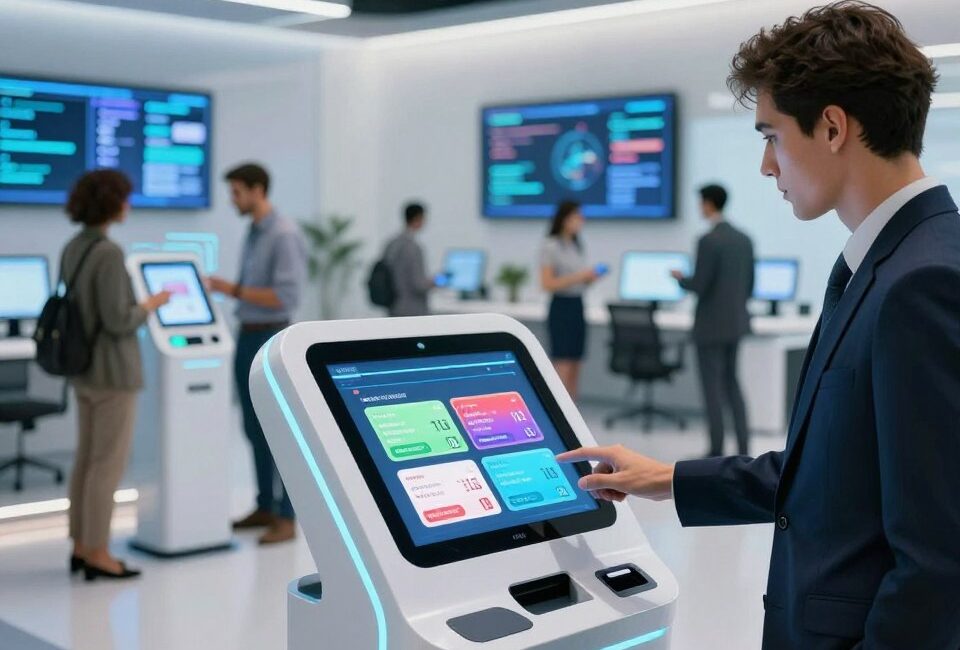
Are traditional ticketing systems holding your customer support back? With the rise of AI-powered ticketing, businesses can now automate manual processes, enhance efficiency, and improve customer satisfaction.
The use of AI in ticketing is transforming the way companies handle customer inquiries. By leveraging AI algorithms, businesses can streamline workflows, prioritize conversations, and even suggest solutions to customer queries.
This transformation is making AI ticketing systems an essential tool for businesses looking to reduce operational costs while enhancing the customer experience.
Key Takeaways
- AI-powered ticketing automates manual processes, enhancing efficiency.
- AI ticketing systems improve customer satisfaction by providing timely solutions.
- The use of AI in ticketing transforms traditional customer support operations.
- Businesses can expect reduced operational costs with AI ticketing systems.
- AI ticketing is becoming a critical component of digital transformation for service-oriented businesses.
Understanding AI Ticketing Systems
AI ticketing systems represent a significant advancement in managing customer support requests. These systems leverage artificial intelligence to automate the categorization, routing, and resolution of customer inquiries, making the support process more efficient and effective.
What Are Artificial Intelligence Tickets?
Artificial intelligence tickets refer to support requests managed through AI-powered systems. These systems use machine learning algorithms to understand customer inquiries and determine the most appropriate actions. By automating the initial stages of ticket handling, AI ticketing systems can significantly reduce the workload on human support agents, allowing them to focus on more complex issues.
For instance, AI can categorize tickets based on their content, prioritize them according to urgency, and even provide initial responses to routine inquiries. This not only speeds up the support process but also enhances customer satisfaction by providing timely and relevant responses.
How AI Ticketing Differs from Traditional Systems
Traditional ticketing systems require manual sorting and assignment, which can be time-consuming and prone to errors. In contrast, AI-powered ticketing systems can automatically categorize and route tickets based on their content, using natural language processing to understand the customer’s intent and sentiment.
| Feature | Traditional Ticketing Systems | AI-Powered Ticketing Systems |
|---|---|---|
| Categorization | Manual | Automated using AI |
| Routing | Manual assignment | Automated based on content analysis |
| Response | Human-generated | AI-generated initial responses |
By understanding the differences between traditional and AI-powered ticketing systems, businesses can make informed decisions about implementing AI ticketing solutions to improve their customer support operations.
The Technology Behind Artificial Intelligence Tickets
The effectiveness of AI ticketing systems is rooted in their technological foundation, which includes Natural Language Processing (NLP) and machine learning algorithms. These technologies enable AI systems to understand customer inquiries, manage tickets efficiently, and provide intelligent support.
Natural Language Processing (NLP)
NLP is a crucial component of AI ticketing systems, allowing them to interpret and understand human language. By analyzing text, NLP helps AI systems identify keywords, understand customer sentiment, and intelligently route and triage tickets. This capability ensures that customer inquiries are addressed promptly and effectively.
Machine Learning Algorithms
Machine learning algorithms analyze past ticketing data to become more efficient over time. These algorithms help AI systems prioritize tickets based on urgency or customer history, suggest tailored solutions, and predict future trends. This continuous learning process enables support teams to allocate resources more effectively and improve customer satisfaction.
Integration Capabilities
AI ticketing systems offer integration capabilities that allow them to connect with existing customer service platforms, CRM systems, and knowledge bases. These integrations create a unified workflow that enhances the overall efficiency of support operations. By integrating with other systems, AI ticketing systems can provide a more comprehensive and streamlined support experience.
Key Benefits of Implementing AI Ticketing
AI-powered ticketing solutions are transforming the way companies handle customer inquiries. By leveraging artificial intelligence, businesses can significantly enhance their customer support operations. This transformation leads to improved customer satisfaction and operational efficiency.
Faster Response Times and Issue Resolution
One of the primary benefits of AI ticketing is the ability to provide faster response times. AI systems can instantly categorize and route tickets to the appropriate departments or agents, ensuring that customers receive timely responses to their inquiries. This rapid response mechanism leads to quicker issue resolution and higher customer satisfaction rates.
Reduced Manual Workload for Support Teams
AI automation significantly reduces the manual workload for support teams. By handling routine inquiries and tasks, AI systems free human agents to focus on more complex issues that require personal attention. This division of labor not only improves efficiency but also enhances the overall customer experience.
Improved Ticket Classification and Routing
AI ticketing systems excel at ticket classification and routing. By accurately categorizing tickets based on their content, AI ensures that issues are directed to the most appropriate agents or departments. This precise routing leads to more efficient issue resolution and improved customer satisfaction.
Enhanced Data Analytics and Reporting
AI ticketing systems provide enhanced data analytics and reporting capabilities. These systems offer valuable insights into customer issues, agent performance, and overall service quality. By analyzing these data, businesses can identify trends, anticipate customer needs, and make data-driven decisions to improve customer service and support operations.
By implementing AI ticketing, businesses can achieve significant benefits, including improved response times, reduced manual workload, enhanced ticket classification, and better data analytics. These advantages contribute to a more efficient and effective customer support system, ultimately leading to higher customer satisfaction and reduced operational costs.
How to Choose the Right AI Ticketing System

Selecting the ideal AI ticketing system is crucial for businesses aiming to enhance their customer support operations. Conventional ticketing systems without AI can add extra challenges to ticket management, making it tough to classify and assign support tickets to the right agent.
Assessing Your Business Needs
Before diving into the selection process, it’s essential to assess your current support processes, ticket volumes, and common customer issues. Understanding your business needs will help you identify the key features required in an AI ticketing system.
Key Features to Look For
When evaluating AI ticketing systems, look for features such as natural language understanding, automation capabilities, and reporting tools. These features can significantly enhance your customer support operations by streamlining ticket management and improving response times.
Integration with Existing Workflows
It’s crucial to evaluate the integration capabilities of AI ticketing systems with your existing workflows and technology stacks. Seamless integration can ensure a smooth transition and maximize the benefits of the AI ticketing system.
When choosing an AI ticketing system, consider factors such as scalability, flexibility, and the ability to balance automation with human oversight. Additionally, assess the vendor’s support, updates, and ongoing improvements to the system. By carefully evaluating these aspects, you can select an AI ticketing system that meets your business needs and enhances your customer support operations.
Top 5 AI Ticketing Platforms in 2024
In 2024, businesses have access to a variety of top-notch AI ticketing platforms designed to enhance their customer support operations. These platforms leverage artificial intelligence to streamline ticketing processes, improve response times, and boost customer satisfaction. Here, we’ll explore the top five AI ticketing platforms that are making a significant impact this year.
Zendesk AI
Zendesk AI is renowned for its omnichannel ticketing capabilities, allowing businesses to manage customer inquiries across multiple channels seamlessly. Its AI-powered routing ensures that tickets are directed to the most appropriate agents, enhancing resolution times.
InvGate Service Management
InvGate Service Management stands out for its alignment with ITIL best practices and robust AI-automation features. It offers flexible deployment options, including cloud and on-premises solutions, making it suitable for a wide range of businesses.
Freshservice
Freshservice is ideal for businesses seeking automation with minimal setup. Its intuitive interface and powerful automation capabilities make it a favorite among companies looking to streamline their IT service management.
SysAid
SysAid is tailored for internal IT teams, offering AI-driven ticket management that simplifies the process of handling IT requests. Its comprehensive features include asset management and help desk solutions.
Sendbird
Sendbird offers AI agents that can handle a wide range of customer service tasks, from FAQs to order tracking. Its platform is designed to provide personalized customer experiences across various channels.
Each of these AI ticketing platforms brings unique strengths to the table, from omnichannel support to AI-driven automation. By understanding the specific features and benefits of each platform, businesses can make informed decisions about which solution best fits their customer service needs.
Step-by-Step Guide to Implementing AI Ticketing
Effective implementation of AI ticketing systems is vital for enhancing customer service and support. This involves a series of strategic steps that ensure the successful integration of AI technology within an organization’s existing infrastructure.
Planning Your Implementation Strategy
Planning is a critical phase that involves setting clear objectives, identifying key stakeholders, and establishing metrics for success. It’s essential to assess the current ticketing process and identify areas where AI can add the most value. This stage helps in creating a tailored implementation plan that aligns with the organization’s goals.
Data Preparation and System Training
Data preparation is crucial for training the AI system. This involves gathering historical ticket data, cleaning it, and structuring it in a way that the AI can understand. The quality and relevance of the data directly impact the AI’s ability to accurately categorize and respond to tickets. Ensuring that the AI is trained on a diverse dataset helps in improving its performance and adaptability.

Testing and Optimization
Before full deployment, it’s essential to test the AI ticketing system to validate its performance. This involves running pilot tests, analyzing the results, and making necessary adjustments. Continuous optimization is key to improving the system’s accuracy and effectiveness over time. Regular updates and training with new data help in keeping the system relevant and efficient.
Staff Training and Adoption
Staff training is a vital component of successful AI ticketing implementation. Agents need to be prepared for their evolving roles alongside AI technology. This includes training on how to work with the AI system, interpret its outputs, and handle complex issues that require human intervention. Change management strategies are also crucial to ensure smooth adoption and minimize resistance to the new technology.
| Implementation Stage | Key Activities | Expected Outcomes |
|---|---|---|
| Planning | Setting objectives, identifying stakeholders, establishing success metrics | Clear implementation plan, aligned with organizational goals |
| Data Preparation | Gathering, cleaning, and structuring historical ticket data | Accurate AI training data, improved system performance |
| Testing and Optimization | Pilot testing, analysis, and adjustments | Validated system performance, continuous improvement |
| Staff Training | Training agents, change management | Smooth adoption, effective human-AI collaboration |
Overcoming Common Challenges with AI Ticketing
The adoption of AI ticketing systems is not without its hurdles, and understanding these challenges is crucial for successful implementation. As businesses integrate AI into their customer service operations, they must address several key issues to maximize its potential.
Managing Customer Expectations
Managing customer expectations is vital when implementing AI ticketing systems. Transparency about when customers are interacting with AI versus human agents is crucial. Businesses should clearly communicate the benefits and limitations of AI ticketing to set realistic expectations. By doing so, companies can reduce anxiety and build trust with their customers.
Maintaining the Human Touch
While AI can handle a significant volume of customer inquiries, maintaining the human touch is essential for complex or emotionally sensitive issues. Businesses should strike a balance between automation and personalized human intervention to ensure a positive customer experience. This can be achieved by implementing a hybrid model where AI handles routine queries and human agents focus on more intricate problems.
Addressing Privacy and Security Concerns
AI ticketing systems also raise privacy and security concerns. To address these, businesses must implement robust data protection measures and ensure compliance with relevant regulations. By prioritizing data security and being transparent about how customer data is used, companies can alleviate concerns and build confidence in their AI ticketing systems.
By understanding and addressing these challenges, organizations can successfully implement AI ticketing systems that enhance customer service while maintaining trust and satisfaction.
Industry-Specific Applications of AI Ticketing
The application of AI in ticketing is transforming how businesses operate in different sectors. AI ticketing systems are being adopted across various industries to improve customer service, streamline support processes, and enhance overall operational efficiency.
Ecommerce and Retail
In ecommerce and retail, AI ticketing is used to handle high volumes of inquiries about products, orders, shipping, and returns. AI-powered chatbots can quickly respond to customer queries, reducing response times and improving customer satisfaction. For instance, a leading online retailer implemented AI ticketing to manage their customer inquiries, resulting in a 30% reduction in response time and a 25% increase in customer satisfaction.

Healthcare
The healthcare industry utilizes AI ticketing automation to simplify appointment scheduling, patient inquiries, and administrative processes. AI chatbots can assist patients in booking or changing doctor’s visits 24/7, freeing up administrative staff for other tasks. A healthcare provider reported a 40% decrease in no-show appointments after implementing AI ticketing for appointment reminders and scheduling.
Customer Service and Support
Dedicated customer service and support operations leverage AI ticketing to manage diverse inquiries across multiple channels and time zones. AI ticketing systems can intelligently route tickets to the appropriate support agents, ensuring timely resolution of customer issues. According to a study, companies using AI ticketing in their customer service operations saw a 20% improvement in first-contact resolution rates.
Real Estate
Real estate companies use AI ticketing to handle property inquiries, schedule viewings, and manage maintenance requests. AI-powered systems can provide immediate responses to common queries, improving the customer experience. A real estate firm noted a 35% increase in lead conversion after implementing AI ticketing to handle initial property inquiries and follow-ups.
As AI ticketing continues to evolve, its applications across different industries are expected to grow, offering even more innovative solutions to customer service and support challenges.
Measuring Success: KPIs for AI Ticketing Systems
Measuring the success of AI ticketing systems involves tracking a range of KPIs that provide insights into their efficiency and effectiveness. As businesses continue to adopt AI-powered customer support solutions, understanding these metrics is crucial for optimizing performance and justifying investment.
Response Time and Resolution Rate
Response time and resolution rate are critical KPIs for evaluating the performance of AI ticketing systems. First response time, average resolution time, and first-contact resolution rate are key metrics that indicate how quickly customer inquiries are addressed. According to the Zendesk Customer Experience Trends Report, 51 percent of consumers prefer interacting with bots over humans for immediate assistance, highlighting the importance of swift responses.
| KPI | Description | Importance |
|---|---|---|
| First Response Time | Time taken to respond to a customer inquiry | High |
| Average Resolution Time | Average time taken to resolve a customer issue | High |
| First-Contact Resolution Rate | Percentage of issues resolved on the first contact | High |
Customer Satisfaction Metrics
Customer satisfaction is a vital aspect of measuring the success of AI ticketing systems. Metrics such as CSAT scores, Net Promoter Score (NPS), and customer effort scores help gauge the impact of AI ticketing on the overall customer experience. These metrics provide insights into how well the AI system is meeting customer expectations.
Agent Productivity and Efficiency
Agent productivity and efficiency are also crucial KPIs. Metrics such as tickets handled per agent, handle time, and agent utilization rates help assess how AI ticketing systems are impacting the workload and performance of support agents. By optimizing these metrics, businesses can improve overall support efficiency.
By tracking these KPIs, businesses can comprehensively evaluate the success of their AI ticketing systems and identify areas for improvement.
Future Trends in Artificial Intelligence Tickets
The integration of AI in ticketing systems is on the cusp of a significant evolution, driven by advancements in machine learning and data analytics. As organizations continue to adopt AI ticketing solutions, several emerging trends are expected to shape the future of customer support.
Advanced Predictive Analytics
AI will leverage historical data and predictive analytics to anticipate peak periods and forecast future ticket volumes. This capability will enable managers to make data-driven decisions, proactively adjust staffing levels, and reallocate resources to optimize customer support. Predictive analytics will play a crucial role in enhancing the efficiency of support teams.
Voice-Enabled AI Ticketing
The growing role of voice-enabled AI ticketing will revolutionize the way customers interact with support systems. Voice recognition and natural language understanding will create new channels for ticket submission and resolution, making it easier for customers to get help.
Hyper-Personalization Through AI
AI systems will leverage comprehensive customer data to deliver increasingly tailored support experiences. Hyper-personalization will become a key differentiator for organizations, enabling them to provide customer-centric support that meets individual needs.
| Trend | Description | Impact |
|---|---|---|
| Advanced Predictive Analytics | Anticipating peak periods and forecasting ticket volumes | Optimized customer support and resource allocation |
| Voice-Enabled AI Ticketing | New channels for ticket submission and resolution | Enhanced customer experience and convenience |
| Hyper-Personalization | Tailored support experiences based on customer data | Increased customer satisfaction and loyalty |
As AI continues to evolve, we can expect AI ticketing systems to become more autonomous, handling complex issues without human intervention. The integration of AI with emerging technologies like augmented reality and blockchain will further enhance the capabilities of ticketing systems.
Conclusion
The integration of AI in ticketing systems marks a significant shift in how businesses approach customer support. Throughout this article, we’ve explored the transformative impact of artificial intelligence tickets on customer service, from improved efficiency and reduced costs to enhanced customer experiences.
By implementing AI ticketing systems, businesses can automate routine tasks, allowing human agents to focus on higher-value tasks that require empathy and complex problem-solving. This not only boosts agent productivity but also leads to faster response times and issue resolution. Moreover, AI-powered ticket automation enables companies to provide personalized customer service, leading to increased customer satisfaction.
The benefits of AI ticketing are not limited to customer-facing aspects. By leveraging machine learning algorithms and data analytics, businesses can gain valuable insights into their customer support processes, identifying areas for improvement and optimizing their operations.
As AI technology continues to evolve, we can expect to see even more sophisticated applications of AI ticketing systems. Businesses that adopt these technologies early on will be better positioned to meet the evolving expectations of their customers and stay ahead of the competition.
In conclusion, embracing AI ticketing is no longer just an optional enhancement; it’s becoming a competitive necessity. We encourage businesses to evaluate their current ticketing processes and consider how AI-powered ticket automation can help them address operational challenges and deliver exceptional customer experiences.
FAQ
What is the primary function of AI ticketing systems?
How do AI ticketing systems differ from traditional ticketing systems?
What are the key benefits of implementing AI ticketing systems?
How can businesses choose the right AI ticketing system?
What are some common challenges associated with AI ticketing systems?
How can the success of AI ticketing systems be measured?

Other Articles

Safeguard Your Apps with Application Whitelisting
What is the Artificial Intelligence of Things (AIoT)?